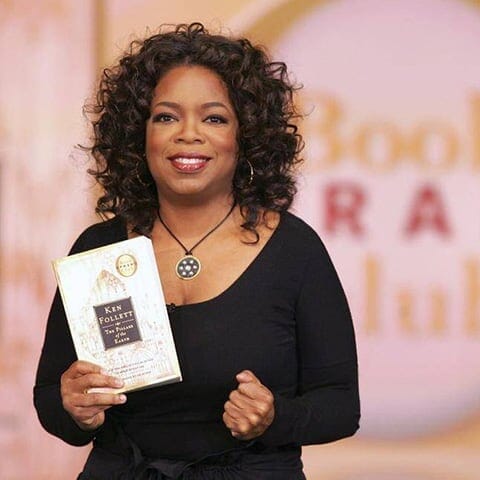
What Oprah Winfrey’s reading reveals is a coherent theory of what books are
for: they are instruments of empathy and transformation. Her favourite writer,
Toni Morrison, is the key. Across Song of Solomon, The Bluest
Eye, Sula and Paradise — four selections, more than she
gave any other author — Oprah returns to Morrison’s unflinching interior
portraits of Black American life, and she has used Morrison as the benchmark
against which she measures everything else. When she chose Ta-Nehisi Coates’s
The Water Dancer decades later, her praise was that she had not felt
that way about a book "since Beloved." Morrison is the standard.
Around that centre run three currents. There is the great sweeping
novel of endurance — Steinbeck’s East of Eden, which she
relaunched the club with and called the best she had read; Mistry’s A Fine
Balance; Kingsolver’s The Poisonwood Bible; the classics she sent
a mass audience back to, from Anna Karenina to One Hundred Years
of Solitude. There is the true story — Michelle Obama’s
Becoming, Cheryl Strayed’s Wild, Elie Wiesel’s Night
— testimony as a route to understanding. And there is the spiritual
awakening — Eckhart Tolle’s A New Earth, the only book she has
ever chosen twice; Gary Zukav’s The Seat of the Soul, which she
prefaced; Don Miguel Ruiz’s The Four Agreements — the inner work that
is arguably her deepest reading of all.
What her curation reveals that a flat list cannot is accountability. Oprah’s
recommendations carry unmatched power, and she has treated that power
seriously — including when it failed. She championed James Frey’s memoir, then,
when it proved fabricated, confronted him on air and apologised to her readers;
she fell out with Jonathan Franzen over The Corrections and later
reconciled by choosing Freedom. To read Oprah’s list is to watch a
curator who understands that recommending a book to millions is a form of
trust — and who is willing to be held to it.