
Business Adventures
Verified
The book Warren Buffett lent him in 1991 and which he still names the best business book he has read.
BlogSource: Bill Gates — Gates Notes review
Your search did not return any results.
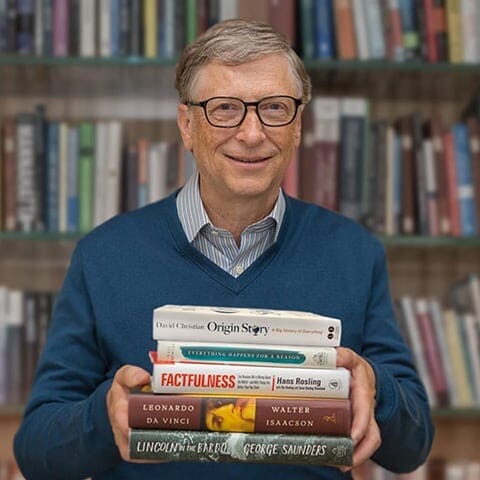
Bill Gates reads the way an engineer debugs a system: to understand how something really works before trying to change it. The Microsoft co-founder turned philanthropist works through dozens of books a year — overwhelmingly non-fiction — and has spent more than a decade publishing his reactions on Gates Notes, where his summer and year-end reading lists have become a fixture. He reads with a pen, arguing with authors in the margins, and gravitates to books dense enough to reward that effort: energy and materials, global health and disease, economics and development, history, biography and the honest use of statistics.
What ties the shelf together is purpose. Gates reads to make decisions — where a foundation should spend, why a disease persists, how a grid actually delivers power — so he prizes writers who go both deep and broad and who let the data lead. That instinct shows up as a handful of recurring intellectual anchors: Vaclav Smil, whose quantitative histories of energy shape how Gates thinks about climate; Steven Pinker and the late Hans Rosling, whose case for measurable human progress underpins his evidence-based optimism; and biographers such as Walter Isaacson. Fiction is rare and usually earns its place by illuminating something real. The result is less a list of favourites than a working library for understanding — and trying to improve — the modern world.
Read together, Bill Gates's recommendations describe a particular way of thinking rather than a taste in books: quantitative, systems-minded, and cautiously optimistic because the numbers, as he reads them, point that way. The spine of the list is Vaclav Smil. Gates recommends Smil more than any other author — Energy and Civilization and How the World Really Works — because Smil treats energy and materials as the physical substrate of everything else, and that lens runs straight into Gates's own work on climate. It is the clearest example of reading feeding action.
Around that spine sit three reinforcing threads. A progress thread — Pinker's Enlightenment Now and The Better Angels of Our Nature, Rosling's Factfulness — makes the empirical argument that life is improving and that clear-eyed data beats gut pessimism; it is the intellectual justification for the whole philanthropic project. A science-and-health thread — The Gene, The Code Breaker, The Great Influenza — tracks the biology and pandemics that define the Gates Foundation's mission. And a how-the-world-works thread — How Asia Works, Business Adventures, How to Lie with Statistics — insists on understanding development, business and numbers from first principles before acting on them.
The through-line is that Gates reads to model reality and then to change it. Even his rare fiction and memoir picks — A Gentleman in Moscow, Educated — tend to reward the same curiosity about how people and systems actually behave. It is the reading list of someone who treats a book less as entertainment than as one more input into a decision.
From how businesses work, Gates zooms out to the biggest system of all — energy — through the author he recommends most, Vaclav Smil.
Smil's synthesis deepens into the physical realities — materials, food, fuel — that any climate plan has to reckon with.
Understanding the system leads to measuring it honestly; Rosling supplies the data discipline that resists gut pessimism.
And the data, read at scale, becomes an argument — Pinker's case that life is improving, which anchors Gates's optimism.
The book Warren Buffett lent him in 1991 and which he still names the best business book he has read.
BlogSource: Bill Gates — Gates Notes review
He has called it a new favourite — Pinker’s data-driven case that the world is getting better anchors Gates’s optimism.
BlogSource: Bill Gates — Gates Notes review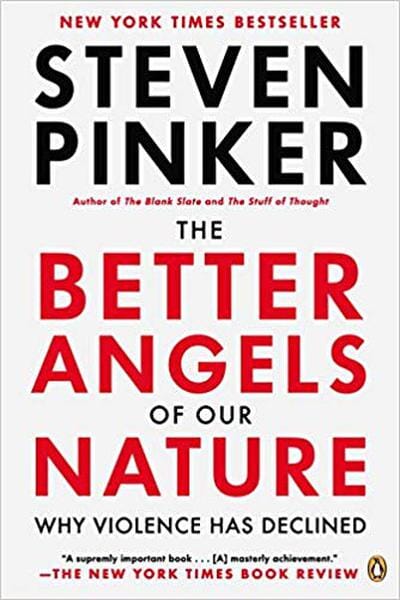
For years his single most-recommended book — Pinker’s long-run evidence that violence has declined.
BlogSource: Bill Gates — Gates Notes review
The flagship of his Vaclav Smil devotion — energy as the master variable running through all of history.
BlogSource: Bill Gates — Gates Notes review
Smil on the material realities — food, fuel, materials — that any climate plan must confront; Gates calls him a favourite author.
BlogSource: Bill Gates — Gates Notes (Summer 2022)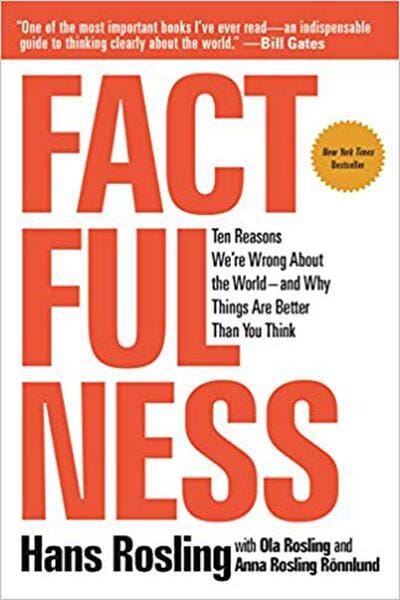
Rosling’s guide to thinking about the world with data, not instinct — Gates gave a copy to every U.S. college graduate that year.
BlogSource: Bill Gates — Gates Notes review
A history of genetics that leaves you able to engage seriously with the ethics of gene editing.
BlogSource: Bill Gates — Gates Notes review
Isaacson on Jennifer Doudna and CRISPR — accessible science on a technology Gates sees as pivotal.
BlogSource: Bill Gates — Gates Notes (Holiday 2021)
His pandemic-era pick on the 1918 flu — the historical mirror for a subject he had warned about for years.
BlogSource: Bill Gates — Gates Notes (Summer 2020)
His clearest recommendation on why some economies develop and others stall — reportedly required reading for his foundation’s agriculture team.
BlogSource: Bill Gates — Gates Notes reviewA sweeping big-history account of humankind he recommends to anyone curious about how we got here.
BlogSource: Bill Gates — Gates Notes review
Harari on the present rather than the past; Gates recommends it even where he disagrees, precisely because it makes him think.
BlogSource: Bill Gates — Gates Notes (Holiday 2018)Diamond on what traditional societies can teach modern ones — Gates is a longstanding admirer of his big-picture history.
BlogSource: Bill Gates — Gates Notes (Best Books 2013)
Dweck’s fixed-vs-growth mindset, which he values for being solutions-oriented rather than merely diagnostic.
BlogSource: Bill Gates — Gates Notes review
A short, decades-old classic he recommended to everyone at TED — the numeracy behind all his other reading.
BlogSource: Bill Gates — Gates Notes (6 Books I Recommended for TED 2015)TweetAlso: Bill Gates on X (TED 2015 recommendation)
Wallace’s tennis essays — proof that, occasionally, Gates recommends a book purely for the quality of the writing.
BlogSource: Bill Gates — Gates Notes (Holiday 2016)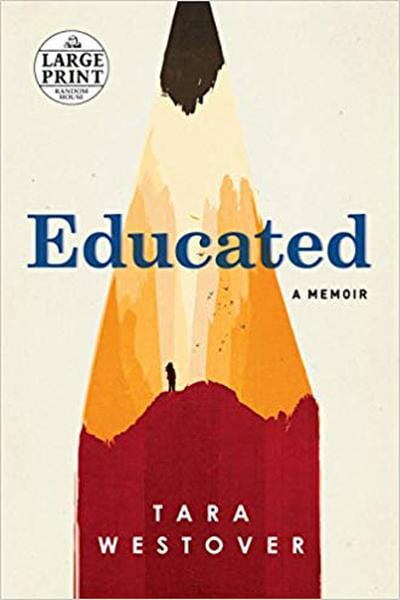
The memoir he and Melinda both loved — a story of self-education that got him reflecting on his own path.
BlogSource: Bill Gates — Gates Notes (Holiday 2018)
A rare novel he recommends across more than one list — a reminder that his fiction picks skew literary and character-driven.
BlogSource: Bill Gates — Gates Notes (Summer 2019)
A thoughtful essay on vaccines and fear that sits squarely inside his global-health preoccupations.
BlogSource: Bill Gates — Gates Notes (Summer 2015)One of the five he named all-time favourites — a slim classic on focus and self-interference that reaches well beyond sport.
BlogSource: Bill Gates — Gates Notes (5 of my all-time favourite books, 2022)Across his Gates Notes writing, Gates has singled out Steven Pinker’s Enlightenment Now as a favourite and John Brooks’s Business Adventures as the best business book he has read. He has also named a small set of all-time favourites, and returns again and again to the work of Vaclav Smil.
Business Adventures by John Brooks. Warren Buffett lent Gates his copy in 1991, and Gates has described it ever since as the best business book he has read — a set of New Yorker stories about how companies actually succeed and fail.
Smil is the author Gates recommends most. His quantitative histories — Energy and Civilization, How the World Really Works — treat energy and materials as the physical basis of civilisation, which is exactly how Gates frames the challenge of climate change. Gates has called Smil one of his favourite authors.
Rarely, but he does. His non-fiction dominates, and the novels he recommends — such as A Gentleman in Moscow — tend to be literary and character-driven, or, like David Foster Wallace’s String Theory, chosen for the sheer quality of the writing.
Mostly non-fiction about how the world works: energy and climate, global health and pandemics, economics and development, big history and science, and the honest use of statistics. The common thread is reading to understand complex systems well enough to act on them.
On his own site, Gates Notes, through long-form book reviews and his summer and year-end reading lists. Each recommendation above links to the specific Gates Notes review or list it comes from.